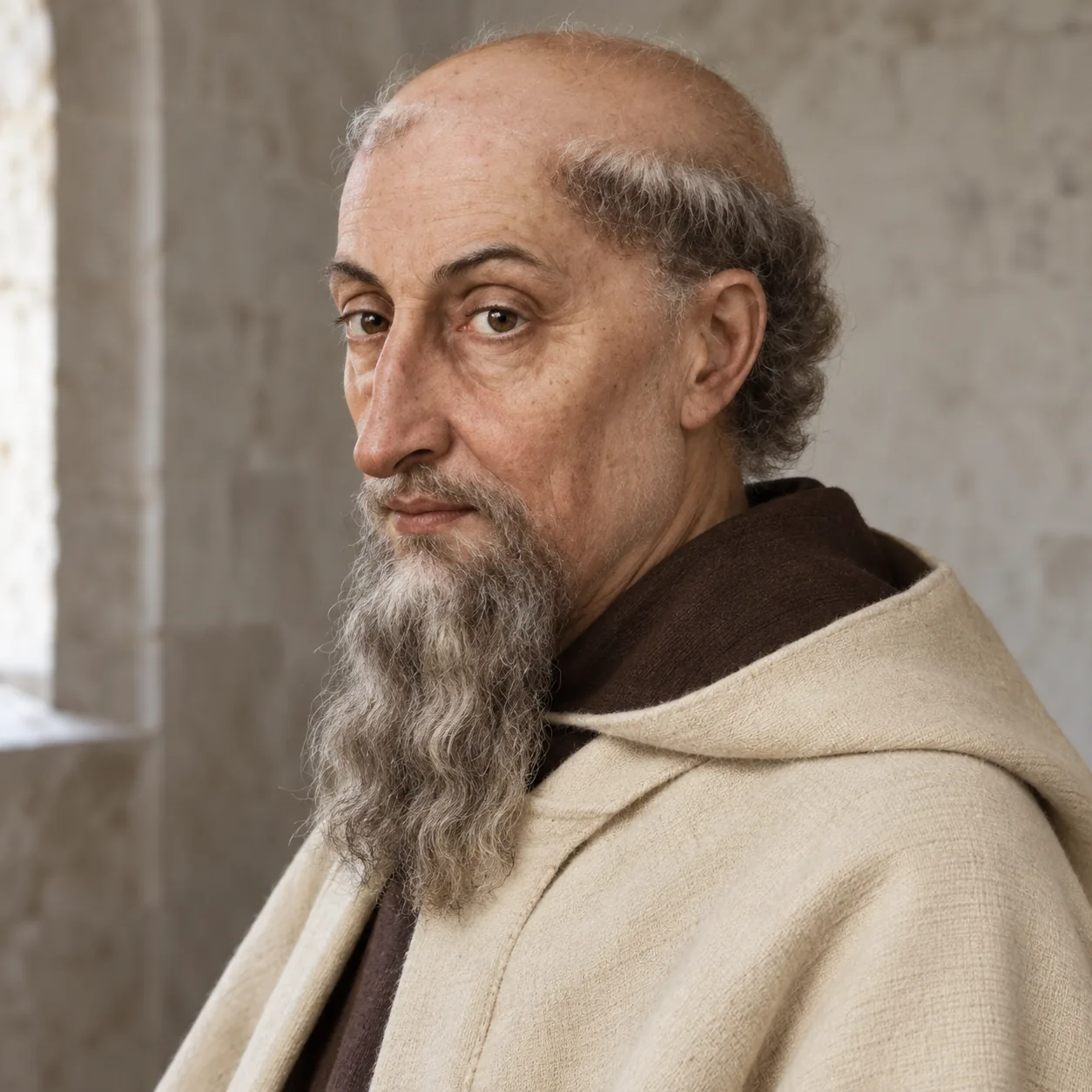
Saint Nuno Álvares Pereira
Friar · 1360-1431
Religious brother, Carmelite, formerly constable of Portugal, husband and father
Saint Nuno Álvares Pereira was Constable of Portugal, a husband and father, and at the end of his life a lay brother among the Carmelites in Lisbon. The Portuguese call him the Holy Constable. The Roman Martyrology commemorates him on November 1.
He was born on June 24, 1360, most probably at Cernache do Bonjardim. He was the illegitimate son of Álvaro Gonçalves Pereira, prior of the Hospitallers at Crato. Legitimized by royal decree, he received a knightly education and was knighted at the age of thirteen. At sixteen he married a young widow, Leonor de Alvim. They had three children: two sons, who died in childhood, and a daughter, Beatriz, who later married Afonso, the first Duke of Braganza.
When King Ferdinand I died in 1383 without a male heir, the King of Castile, the husband of his daughter, laid claim to the crown. Nuno sided with the late king’s half brother John, Master of the Order of Aviz and later King John I, who made him constable, that is, commander in chief of the army. He led the Portuguese to several victories, and the Battle of Aljubarrota on August 14, 1385, decided the independence of the kingdom.
His military gifts went together with deep piety. He attended Mass every day, fasted in honor of Mary on Wednesdays, Fridays, and Saturdays, and carried on his banner the images of the Crucified, of the Mother of God, and of Saints James and George. He publicly attributed his victories to Mary’s intercession. He built churches, most of them dedicated to the Mother of God, and in Lisbon he founded the church and convent of the Carmelites.
After his wife’s death in 1387 he did not marry again. When peace came, he gave most of his wealth to his former companions in arms. On August 15, 1423, he gave up his dignities and the rest of his possessions and received the Carmelite habit in the convent he himself had founded. He chose the humblest place in the community, that of a donatus brother, and would not accept ordination. From then on he was called Brother Nuno of Saint Mary (Nuno de Santa Maria). He lived in prayer and penance, and every day he distributed food to the poor.
He died in Lisbon in 1431. The day of his death is not certain. The decretal letter of canonization gives April 1 as probable, which was Easter Sunday that year. An older tradition, repeated in the decree of 1918, points to November 1, and it is under that date that the Roman Martyrology lists him. In Portugal and in the Carmelite Order his memorial is kept on November 6. The people at once regarded him as a saint.
Pope Benedict XV confirmed the veneration given to him from time immemorial by a decree of January 23, 1918. Benedict XVI canonized him on April 26, 2009, in St. Peter’s Square. On that day he called him a hero and saint of Portugal and proof that the principles of Christian life can be followed in any situation, even in the army and in war, especially when they serve the common good and the glory of God.