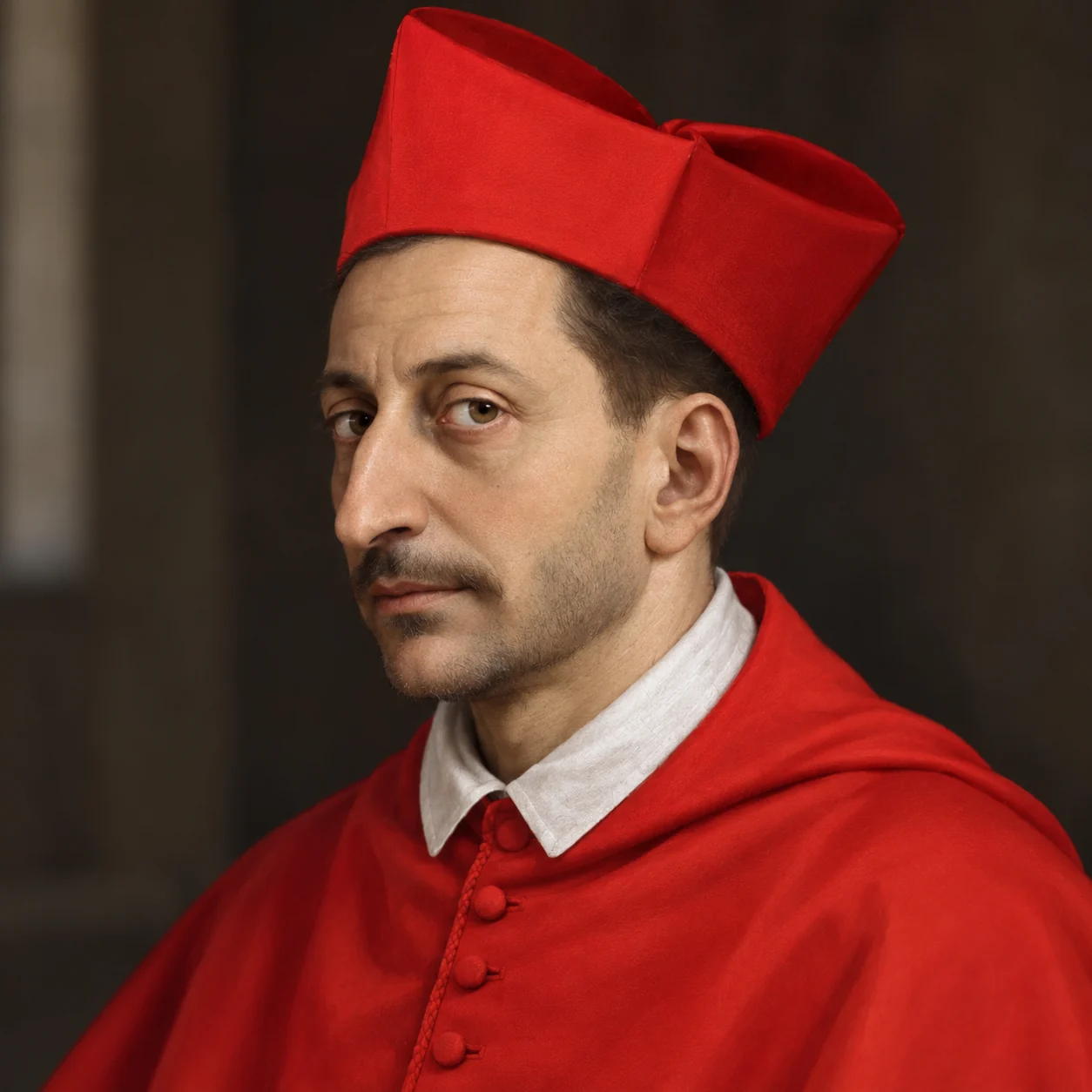
Saint Charles Borromeo
Bishop · 1538-1584
Archbishop of Milan, cardinal
Saint Charles Borromeo was born in Italy in 1538. He gained a reputation as a capable, uncompromising man of strict principles, without a sense of humor. With iron consistency he set about putting the decrees of the Council of Trent into practice. In Charles Borromeo’s time in office, the sale of indulgences and of church offices was common practice. Monasteries were in a deplorable state and “full of disorder,” and the clergy were “lazy, uneducated, and debauched.” Borromeo carried out numerous visitations to restore order. The conciliar reforms he introduced had far-reaching effects and often met with resistance. Because of his inflexibility and severity, he came into conflict with the secular and church authorities, and even with the pope.
He believed that ignorance was the source of abuses. Among his most important undertakings was the establishment of seminaries and of associations dedicated to educating candidates for religious life. His emphasis on the proper preparation of men for the priesthood was meant to raise the standard of the clergy. He supported religious orders and founded confraternities for the laity. He founded orphanages and shelters for the homeless, for girls, and for women. During the epidemics that broke out in Milan several times, he ordered the granaries opened and food distributed to the poor. He personally heard the confessions of the sick and gave them the sacraments. He brought all the religious organizations to work together. Using his private funds and going into debt, he strove to feed up to 70,000 people a day. During a plague epidemic he led a barefoot penitential procession through the streets of the city.
Strenuous work and exhausting journeys weakened his health. He died at the age of 46. He was canonized in 1610 by Pope Paul V.
He is the patron of the Borromean Sisters, of the dioceses of Lugano and Basel, of the University of Salzburg, of librarians, of catechetical institutes, of pastors, and of seminary professors.