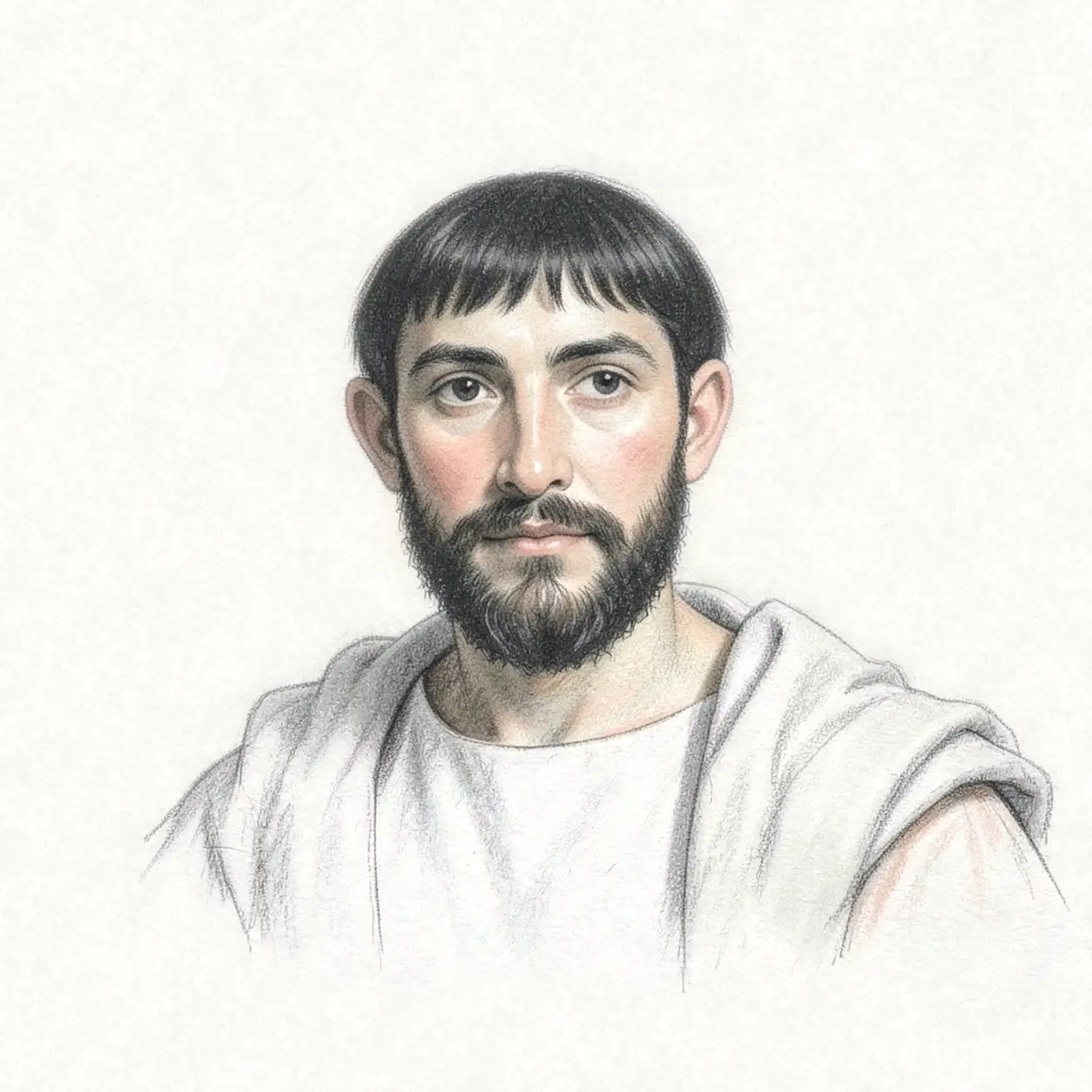
Saints Chrysanthus and Daria
Martyrs of Rome, husband and wife according to tradition
Saints Chrysanthus and Daria are Roman martyrs of the first centuries of Christianity, whom tradition presents as husband and wife. The Roman Martyrology commemorates them on October 25 in Rome, at the cemetery of Thraso on the New Salarian Way, and adds that Pope Saint Damasus praised them.
Very little is known about their lives. It is certain that they gave their lives for Christ in Rome and that their tomb has been venerated since antiquity. It lay in a disused sandpit beside the catacomb of Thraso. A church was built over it, and on their feast day many of the faithful came there. Pope Damasus, who in the fourth century cared for the tombs of the Roman martyrs, adorned the place and had verses in their honor, carved in marble, set up there. In the sixth century the shrine was described by Saint Gregory of Tours.
The rest is told by an account of their martyrdom written long after their death, to which historians do not grant the value of a source. According to this tradition, Chrysanthus came from Alexandria and arrived in Rome to study philosophy. There he came to know Christianity and was converted. His father tried to turn him away from the faith and for this purpose made use, among others, of Daria, a priestess of Vesta. But things turned out otherwise: it was Daria who, under the influence of Chrysanthus, came to believe in Christ.
Tradition goes on to say that the two entered into a marriage in which they preserved their virginity, and that together they brought many inhabitants of Rome to the faith. When they were imprisoned, the tribune Claudius, to whom they had been entrusted, was himself converted along with his whole family. By order of the emperor all were to be put to death. Chrysanthus and Daria were led to a sandpit on the Salarian Way and there, as the account has it, were buried alive.
Tradition places their death in the third century, but this date cannot be confirmed. More certain are the traces of their veneration, which spread far beyond Rome. The figures of both martyrs appear in the mosaics of the Basilica of Sant’Apollinare Nuovo in Ravenna. In the ninth century relics venerated as their remains came to the abbey of Prüm, and from there to Münstereifel in the Rhineland. Remains kept in the cathedral of Reggio Emilia are also regarded as their relics, and the city honors Chrysanthus and Daria as its patrons. The Eastern Churches commemorate them on March 19.
Chrysanthus and Daria belong to the saints venerated since antiquity, long before the process of canonization came into being. Their names were already recorded in the oldest lists of the Church’s martyrs, and to this day the faithful remember them together as two witnesses of fidelity to Christ unto death.