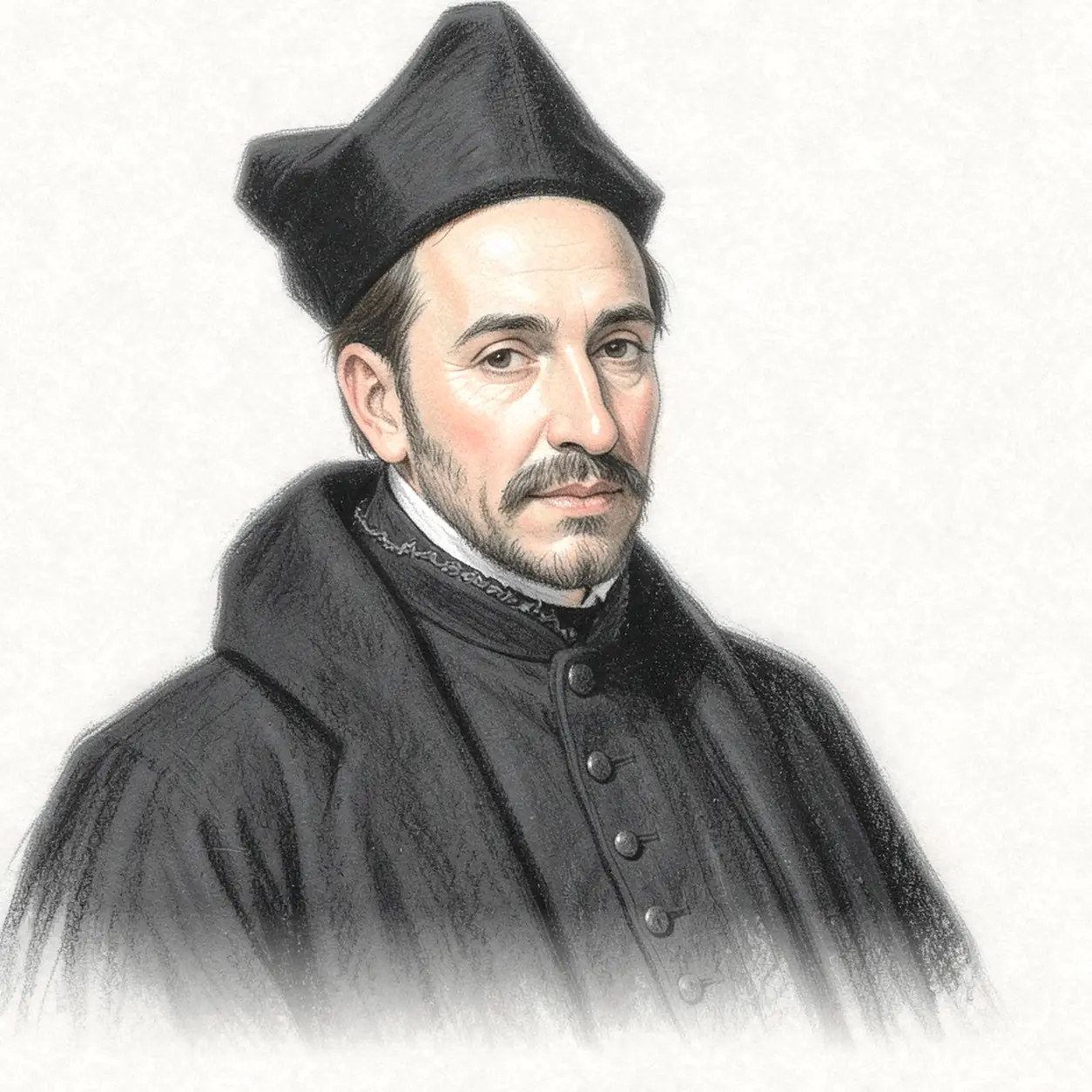
Saint Turibius of Mogrovejo
Bishop · 1538-1606
Bishop of Lima, defender of the indigenous peoples, patron of the Latin American episcopate
Saint Turibius of Mogrovejo was the Archbishop of Lima who, at the end of the sixteenth century, gave lasting shape to the young Church in South America. A Spanish jurist, chosen as bishop while still a layman, he spent most of his ministry on the road, among the native peoples of Peru. The Church remembers him on March 23, the day of his death.
He was born in November 1538 in the town of Mayorga in Spain, into a noble family with a tradition of jurists. The sources give different days for his birth. He studied law, among other places in Salamanca and Coimbra, and then became an inquisitor in Granada. At that time he was not ordained a priest.
In 1579, at the request of King Philip II, Pope Gregory XIII appointed him Archbishop of Lima, a see that had been without a shepherd for several years. Turibius resisted this dignity, but in the end he accepted it. He received the successive holy orders and, in August 1580 in Seville, episcopal consecration. He sailed to Peru in 1581. He landed at the port of Paita, far to the north, and made the rest of the journey overland. In May he reached Lima.
The archdiocese reached far beyond the borders of today’s Peru. The archbishop traveled through it three times on pastoral visitations, often on foot, and spent the greater part of his twenty-five years of ministry outside Lima. He preached the Gospel, administered the sacraments, and founded parishes and hospitals for the poor. He learned the local languages so that he could teach in person, and he required the same of his clergy. Among those he confirmed were Saint Rose of Lima and Saint Martin de Porres.
In 1582 and 1583 he presided over the Third Provincial Council of Lima, whose decrees guided the Church in that part of the world for centuries. Its fruit was a catechism in Spanish and in the Quechua and Aymara languages, the first book published in South America. Later he convened two more provincial councils and about a dozen diocesan synods. In Lima he founded a seminary, regarded as the first in Latin America, which is still in operation today. He also defended the right of mestizos to be ordained priests.
On his visitations he saw the wrongs done to the indigenous people. He stood up for them against officials who were appropriating the money of the native communities, and he did not hesitate to resort to excommunication. This earned him the hostility of many powerful people, including the viceroy. He reminded priests that they were to be shepherds, not merchants. In a time of plague he himself went to the sick and gave them what he had.
He died on March 23, 1606, Holy Thursday, during another visitation, in the town of Saña in northern Peru. According to tradition, he died among his faithful while one of the native people played the flute for him. Pope Innocent XI beatified him in 1679, and Benedict XIII canonized him on December 10, 1726. In 1983 John Paul II proclaimed him patron of the bishops of Latin America.