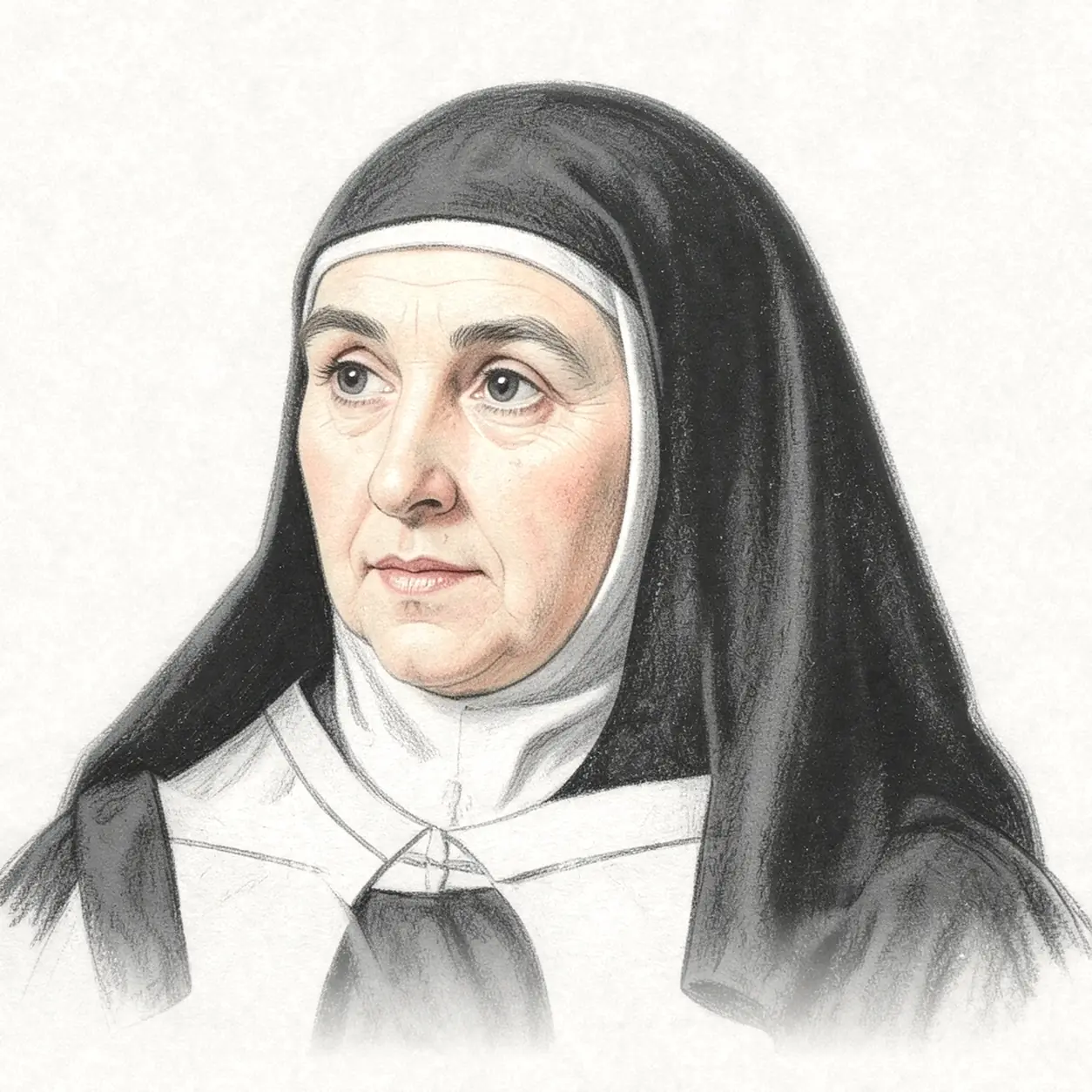
Saint Teresa of Ávila
Nun · 1515-1582
Virgin, reformer of Carmel, Doctor of the Church
Saint Teresa of Ávila, also known as Teresa of Jesus, was a Spanish Carmelite nun, mystic, reformer of her order, and one of the most important spiritual writers of the Church. She was born on March 28, 1515, in Ávila and died in 1582 in Alba de Tormes. Her liturgical memorial falls on October 15.
Teresa grew up in a religious family. As a child she read the lives of the saints with her siblings and - as she herself recalled - dreamed of martyrdom. After her mother’s death she was educated for a time by the Augustinian nuns in Ávila. In her youth she was also drawn to secular literature; she later wrote about the tension between these interests and her desire for a life given to God.
At about the age of twenty she entered the Carmelite Monastery of the Incarnation in Ávila and took the name Teresa of Jesus. Soon afterward she fell seriously ill. Long-lasting health problems accompanied her for much of her life and affected her daily duties in the convent.
Teresa gradually deepened her life of interior prayer. A major turning point for her was an encounter with an image of the suffering Christ, which - according to her own account - moved her and led her to a deeper conversion. Her mystical experiences, which she described in her autobiography and other works, sometimes aroused suspicion. For this reason Teresa submitted them to spiritual directors and theologians.
Teresa wanted Carmelite life to be more centered on prayer and simplicity. In 1562 she founded the Monastery of Saint Joseph in Ávila, the first house of her reform. Her work met with difficulties and opposition, but in time Teresa founded further monasteries. Saint John of the Cross worked with her on the reform of the male branch of the Carmelites; in 1568 they together founded a house in Duruelo. In 1580 the reform received Rome’s approval to function as a separate province.
Teresa left works that remain classics of Catholic spirituality to this day. Among them are The Book of Her Life, The Way of Perfection, and The Interior Castle. She wrote about prayer and the soul’s journey to God, drawing both on her own experience and on her reading and conversations with theologians and spiritual directors.
She died in Alba de Tormes in 1582, after years of travel, founding monasteries, and struggling with poor health. Pope Paul V beatified her in 1614, and Gregory XV canonized her in 1622. In 1970 Pope Paul VI proclaimed her a Doctor of the Church - a title that underlines the special importance of her teaching for faith and Christian life.