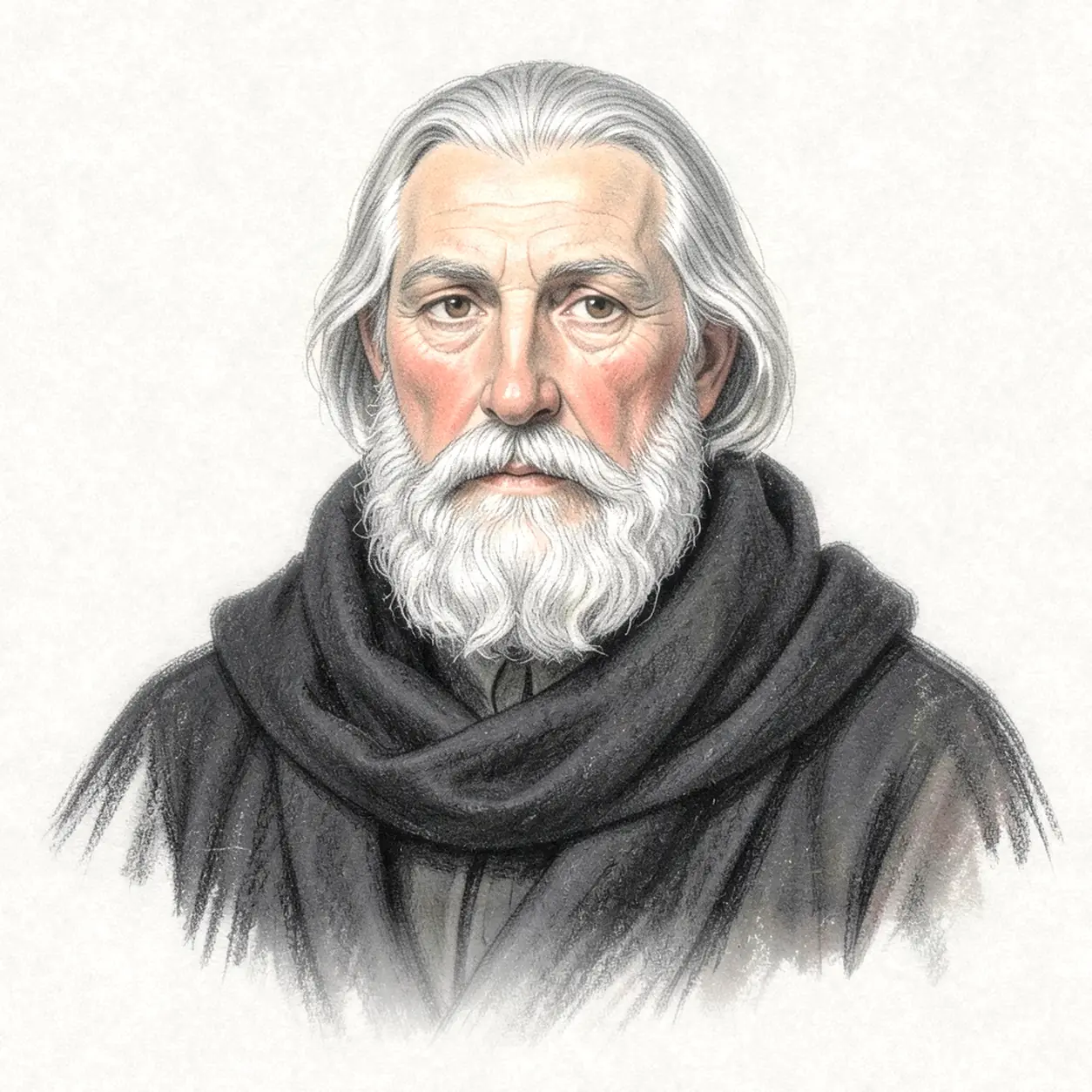
Saint Patrick
Bishop
Bishop, missionary, apostle and patron of Ireland
Saint Patrick was a bishop and missionary who preached the Gospel in Ireland in the fifth century and organized the Church there. He is called the apostle and patron of Ireland. The Church commemorates him on March 17. The surest knowledge of him comes from two short writings that he himself left: the “Confession” and the “Letter to the Soldiers of Coroticus.”
He came from Roman Britain, from a Christian family. His father, Calpornius, was a deacon and a member of the town council, and his grandfather, Potitus, a priest. His home village, which he calls Bannavem Taburniae, has not yet been located on the map. He himself admits that in his youth he did not know the true God. He was about sixteen when Irish raiders carried him off together with thousands of other people.
For six years he was a slave in Ireland and tended sheep. In captivity his faith awoke: he prayed, as he writes, up to a hundred times a day and almost as often at night, even in snow, frost, and rain. One night he heard in his sleep a voice that foretold his return to his homeland and a ship waiting for him. He fled, walked about two hundred miles, and after a hard journey returned to his family in Britain.
A few years later he saw in a vision of the night a man named Victoricus, who brought him from Ireland a letter headed “The Voice of the Irish.” He then heard the cry: “We beg you, holy youth, come and walk among us once more.” He became a deacon and then a bishop, and returned to the island from which he had once escaped. According to early records he was not the first bishop in Ireland: Pope Celestine I had earlier sent Palladius there.
In the “Confession” he tells that he baptized thousands of people and ordained clergy, and that the sons and daughters of Irish rulers became monks and virgins of Christ. He bore insults, was imprisoned and put in irons, and every day reckoned with death or a return to slavery. When the soldiers of the British ruler Coroticus killed some of the newly baptized and sold others into slavery, he demanded in a letter that the captives be freed, and he excluded the perpetrators from the community until they did penance.
The dates of his life are not known with certainty. Tradition links the beginning of his mission with the year 432 and his death with the year 461; some historians move it to the end of the fifth century. The Roman Martyrology states that he fell asleep in the Lord in the city of Down, today’s Downpatrick. The stories of the shamrock with which he is said to have explained the mystery of the Holy Trinity, and of his driving the snakes from the island, appeared only in later centuries; they are not found in his writings.
Patrick has been venerated as a saint since antiquity, long before canonization processes existed. The Hieronymian Martyrology and the Martyrology of Bede already commemorate him on March 17. Tradition links him with the episcopal see of Armagh, the seat of the Primate of All Ireland. His “Confession,” written in old age as a thanksgiving to God, he ended with the words: “And this is my confession before I die.”