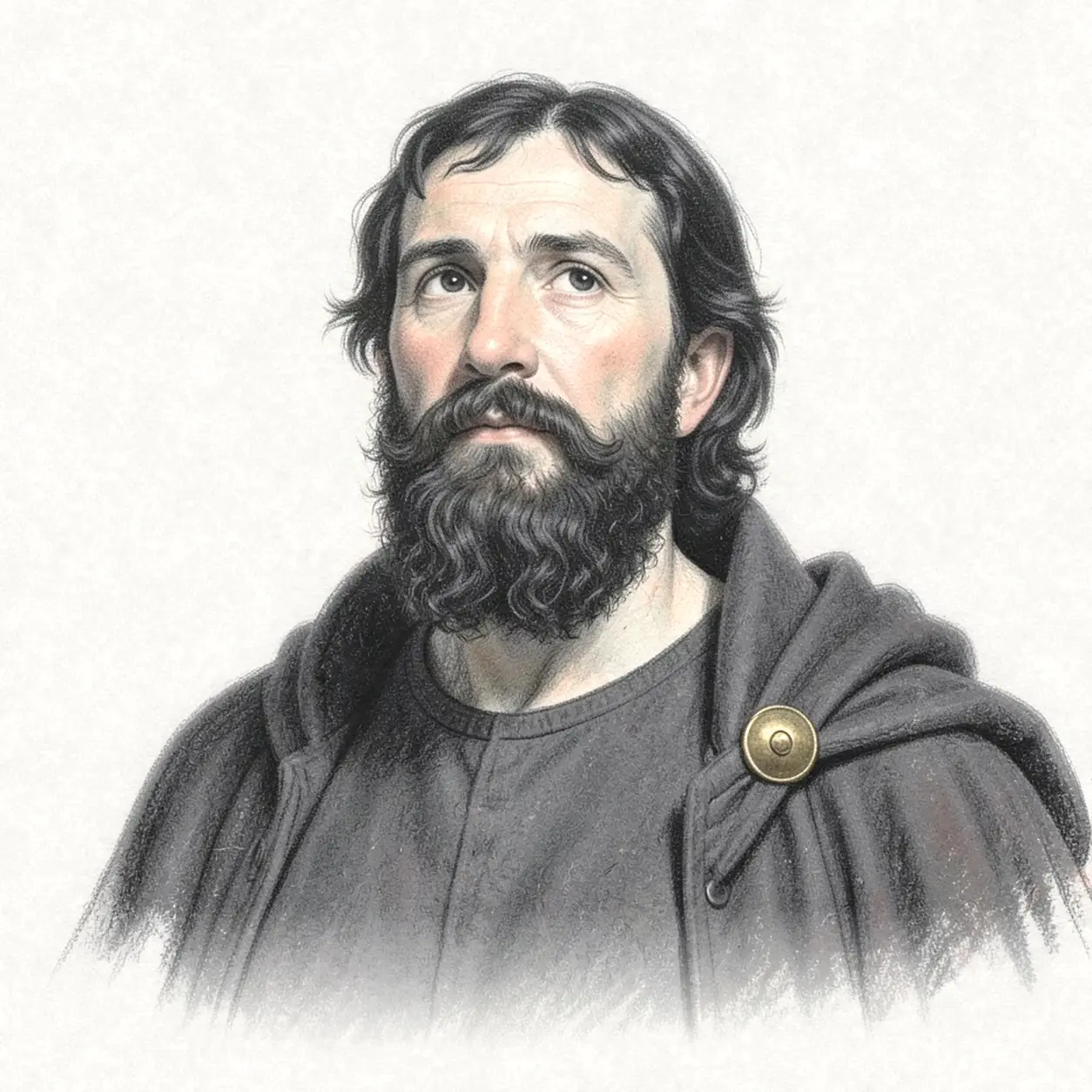
Saint Marcellus the Centurion
Martyr
Martyr, Roman centurion, beheaded at Tangier
Saint Marcellus the Centurion, also called Marcellus of Tangier, was a Roman officer and a martyr of the late third century. He publicly refused to go on serving in the army, professing that he was a Christian, and was beheaded for it. The Church commemorates him on October 30.
Nothing certain is known of his origins, his family, or his youth. We know him from the acts of his martyrdom, which scholars count among the most reliable texts of their kind, because their core consists of the records of two court hearings. Marcellus was a centurion, that is, the commander of a unit in a Roman legion, in the reign of the emperors Diocletian and Maximian. The year 298 is given by one of the surviving versions of the acts, which names the consuls of that year.
The turning point came on July 21. The army was celebrating the emperor’s birthday and everyone was offering sacrifice to the gods. Marcellus stood before the standards of the legion, took off his soldier’s belt, and threw it down together with his weapons and the vine staff that was the badge of his rank. In a loud voice he declared that he was a Christian and could no longer keep the military oath, because he served only Jesus Christ, the Son of God the Father almighty.
The centurion was imprisoned. Soon afterward he was questioned by the governor Fortunatus, who judged the matter too serious to decide by himself. He sent the accused to Tangier, then Tingis in the province of Mauretania Tingitana, before Aurelius Agricolanus, deputy of the praetorian prefects. Where the first hearing took place is not known.
The trial in Tangier was held on October 30. Marcellus confirmed everything he was charged with. Asked what madness had come over him, he answered that there is no madness in those who fear God, and that it is not fitting for a Christian, who serves Christ the Lord, to serve in the armies of this world. Agricolanus sentenced him to death by the sword for breaking military discipline. According to the acts, as he was led to the place of execution Marcellus wished the judge that God might be good to him.
In later centuries Spanish tradition linked Marcellus with the city of León. It made him a soldier of the legion stationed there, the husband of Saint Nonia, and the father of twelve martyred sons. The oldest accounts do not bear this out, and scholars see a legend here. On the same day the Roman Martyrology commemorates the martyrs of León, Claudius, Lupercus, and Victoricus, but it does not call them his sons. According to tradition, the court clerk Cassian protested against the sentence passed on Marcellus, and he too died a martyr and is commemorated on December 3.
Marcellus was not canonized in a formal process. Like other martyrs of the first centuries, he is venerated by virtue of the ancient tradition of the Church. In 1493 his relics were brought from Tangier to León, where they rest in the church dedicated to him. The city honors him as its patron.