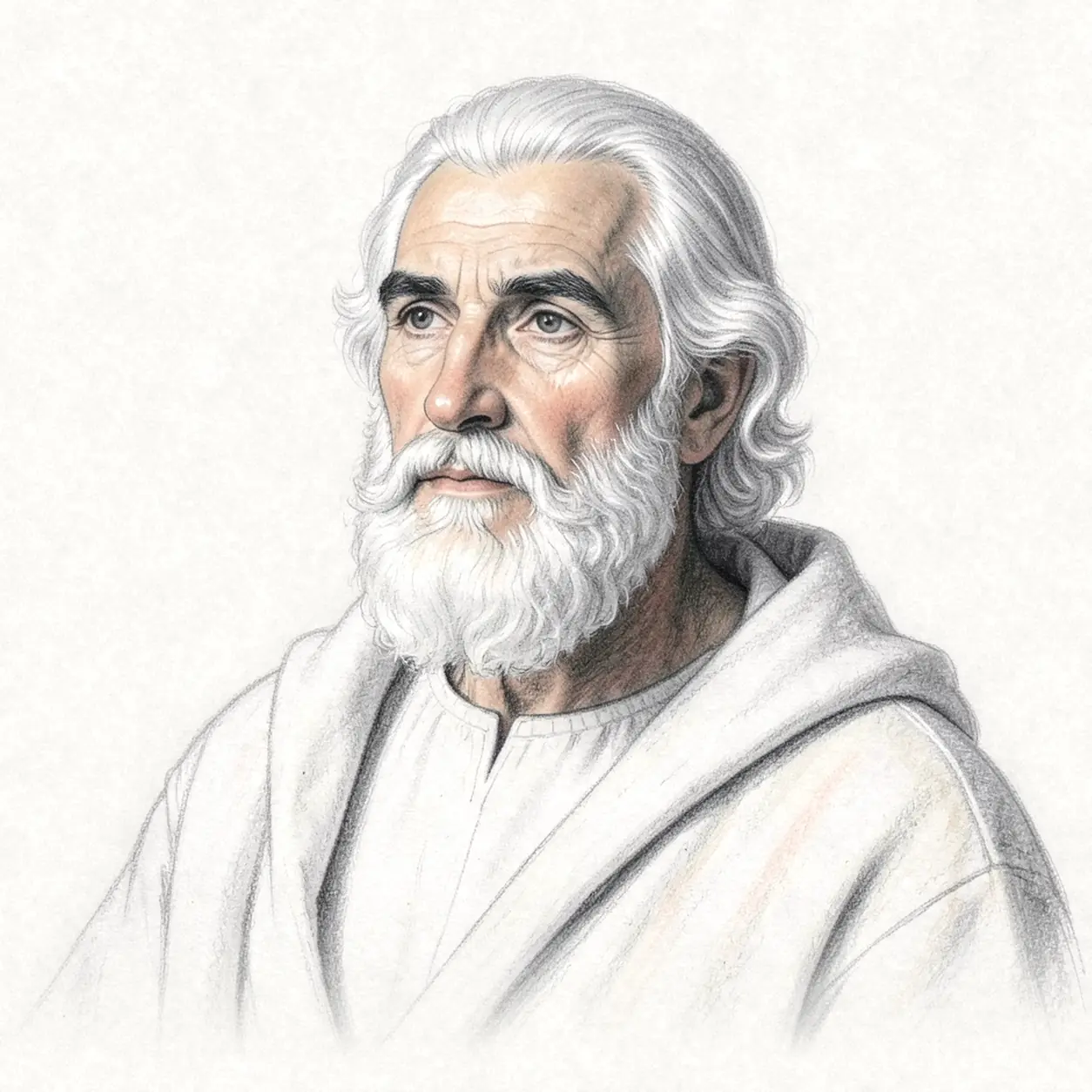
Saint Luke the Evangelist
Evangelist
Evangelist, author of the Acts of the Apostles, companion of Saint Paul
Saint Luke the Evangelist is the author of the third Gospel and of the Acts of the Apostles, a physician, and a companion of Saint Paul the Apostle. He was not one of the Twelve, and in the prologue to his Gospel he himself notes that he relies on the testimony of eyewitnesses. The Church celebrates his feast on October 18.
Little is known about his life. According to a tradition repeated by the Roman Martyrology, he was born in Antioch in Syria to a pagan family. In the Letter to the Colossians, Saint Paul calls him “the beloved physician” and does not count him among his coworkers of Jewish origin. It is not known when or in what circumstances he came to believe in Christ.
In the Acts of the Apostles the narrative shifts several times into the first person plural. As early as the second century, Saint Irenaeus of Lyon concluded from these passages that Luke was with Paul at Troas, crossed with him to Macedonia and reached Philippi, and later accompanied him on the way to Jerusalem and to Rome. Paul counts him among his coworkers, and in the Second Letter to Timothy he writes: “Luke is the only one with me.”
Luke dedicated his Gospel to Theophilus and assured him that he had investigated everything accurately from the beginning. In it we find the scenes of the Annunciation, the Visitation to Saint Elizabeth, the birth of Jesus, the Presentation in the Temple, and the finding of the twelve-year-old Jesus, as well as the hymn of the Magnificat. Luke recorded the parables of the Good Samaritan, the lost sheep, and the prodigal son. He gives much attention to prayer, to the action of the Holy Spirit, to the poor, and to sinners, to whom God shows mercy. The Roman Martyrology calls him the scribe of the gentleness of Christ.
The Acts of the Apostles continue this work. In them Luke tells of the beginnings of the Church, from the Ascension and the descent of the Holy Spirit to Paul’s first stay in Rome. John Paul II wrote that the two books are joined by the theme of the word of God, which sets out from the Holy Land and reaches the ends of the earth.
We do not know how his life ended. According to ancient testimonies he died in Boeotia, in Greece, and was buried in Thebes. Some accounts speak of a martyr’s death, others of a peaceful old age, and the question cannot be settled. Saint Jerome relates that his remains were transferred to Constantinople, to the Basilica of the Holy Apostles. According to tradition, the relics of the Evangelist are kept today in the Basilica of Saint Justina in Padua.
Luke belongs to the saints venerated since the first centuries, so he was never beatified or canonized in today’s sense. A pious tradition credits him with painting an image of the Mother of God. He is venerated as the patron of painters and, because of his profession, of physicians as well. In art his symbol is the ox.