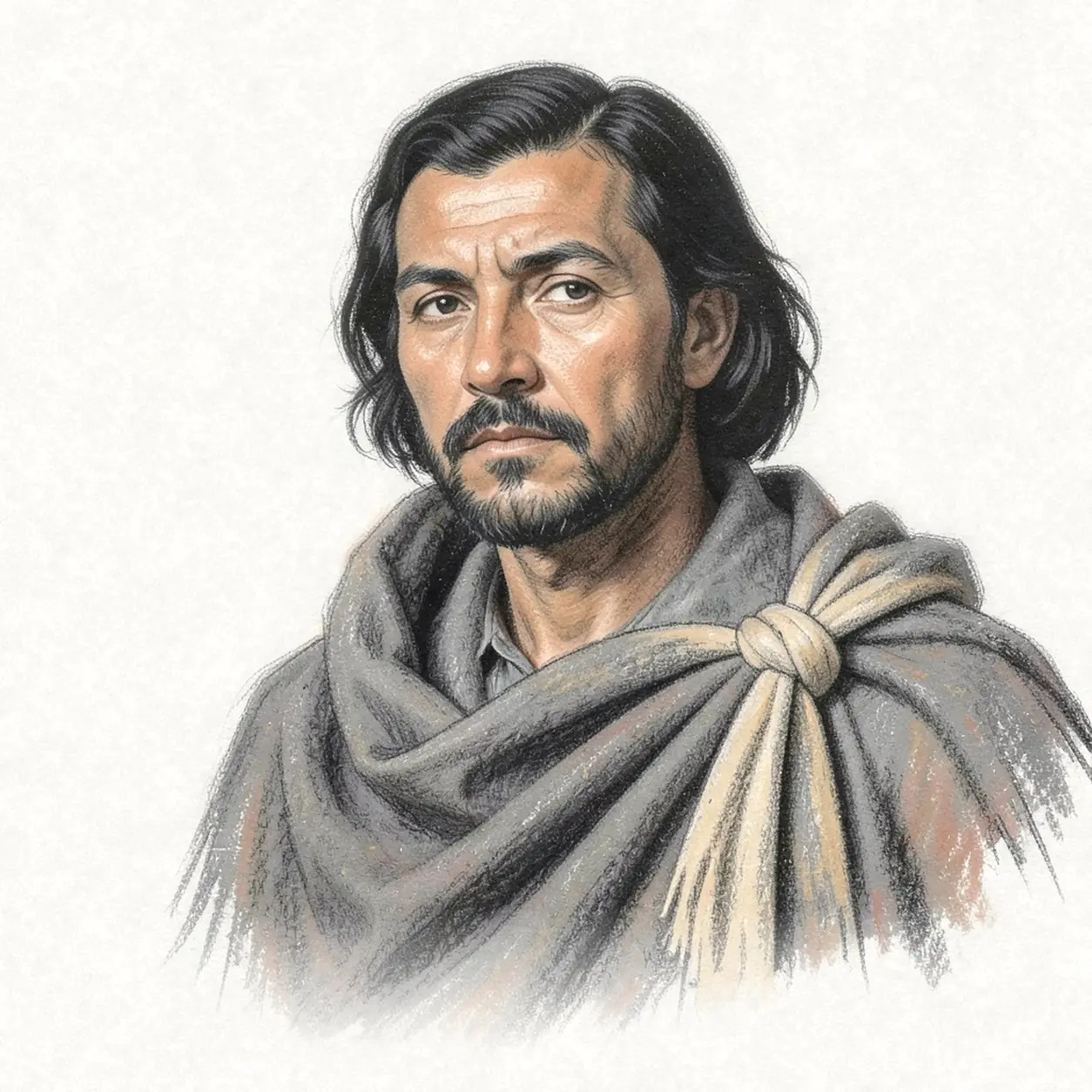
Saint Juan Diego Cuauhtlatoatzin
Lay Person · † 1548
Layman, indigenous man of Mexico, messenger of Our Lady of Guadalupe
Saint Juan Diego Cuauhtlatoatzin was an indigenous man of Mexico and a layman, to whom Our Lady of Guadalupe appeared on Tepeyac Hill in December 1531. John Paul II called him the first indigenous saint of the American continent. The Church commemorates him on December 9, the anniversary of the first apparition.
Little is known of his life before his baptism. According to tradition he was born around 1474 at Cuauhtitlán, in what was then the kingdom of Texcoco, and belonged to the Chichimeca people. He bore the name Cuauhtlatoatzin, which in his mother tongue means “the eagle who speaks.” As a grown, married man he came to know the Franciscans, who had arrived in Mexico in 1524, and was baptized together with his wife, María Lucía. He was widowed in 1529.
On December 9, 1531, he was walking to Tlatelolco. On Tepeyac Hill Mary appeared to him, presented herself as the ever Virgin, Mother of the true God, and told him to ask the bishop of Mexico, the Franciscan Juan de Zumárraga, to build a church on that spot. The bishop did not accept the request. The next day he heard Juan Diego again, questioned him on the truths of the faith, and demanded a sign.
Three days later, on December 12, Mary appeared to him again, consoled him, and told him to climb to the top of the hill to gather flowers. Although it was winter and the place was barren, he found beautiful flowers there, gathered them into his tilma, the cloak worn by the indigenous people, and at Mary’s bidding carried them to the bishop. When he unfolded the cloak, the flowers fell to the ground, and on the cloth appeared the image of Our Lady, venerated to this day in the Basilica of Our Lady of Guadalupe in Mexico City. The oldest indigenous account of these events is the Nican Mopohua, a text in the Nahuatl language from the sixteenth century.
With the bishop’s permission Juan Diego left his family, his home, and his land and went to live in a poor hut beside the chapel where the image had been placed. There he lived like a hermit: he looked after the chapel, welcomed pilgrims, gave much of his time to prayer and penance, and received Holy Communion three times a week. His contemporaries esteemed him so highly that they used to say to their children: “May God make you like Juan Diego.”
He died in 1548 and was buried in the first chapel of Our Lady of Guadalupe. John Paul II said that Juan Diego accepted the Christian message without giving up his indigenous identity, and he presented him as protector and advocate of the indigenous peoples.
On April 9, 1990, a decree was promulgated on the holiness of his life and on the veneration given to him from time immemorial, and on May 6 of that year John Paul II presided in the Basilica of Guadalupe at the solemn celebration in honor of the new blessed. The same pope canonized him there on July 31, 2002. His memorial is kept throughout the Church as an optional memorial. Pope Francis called him the messenger of Our Lady of Guadalupe.