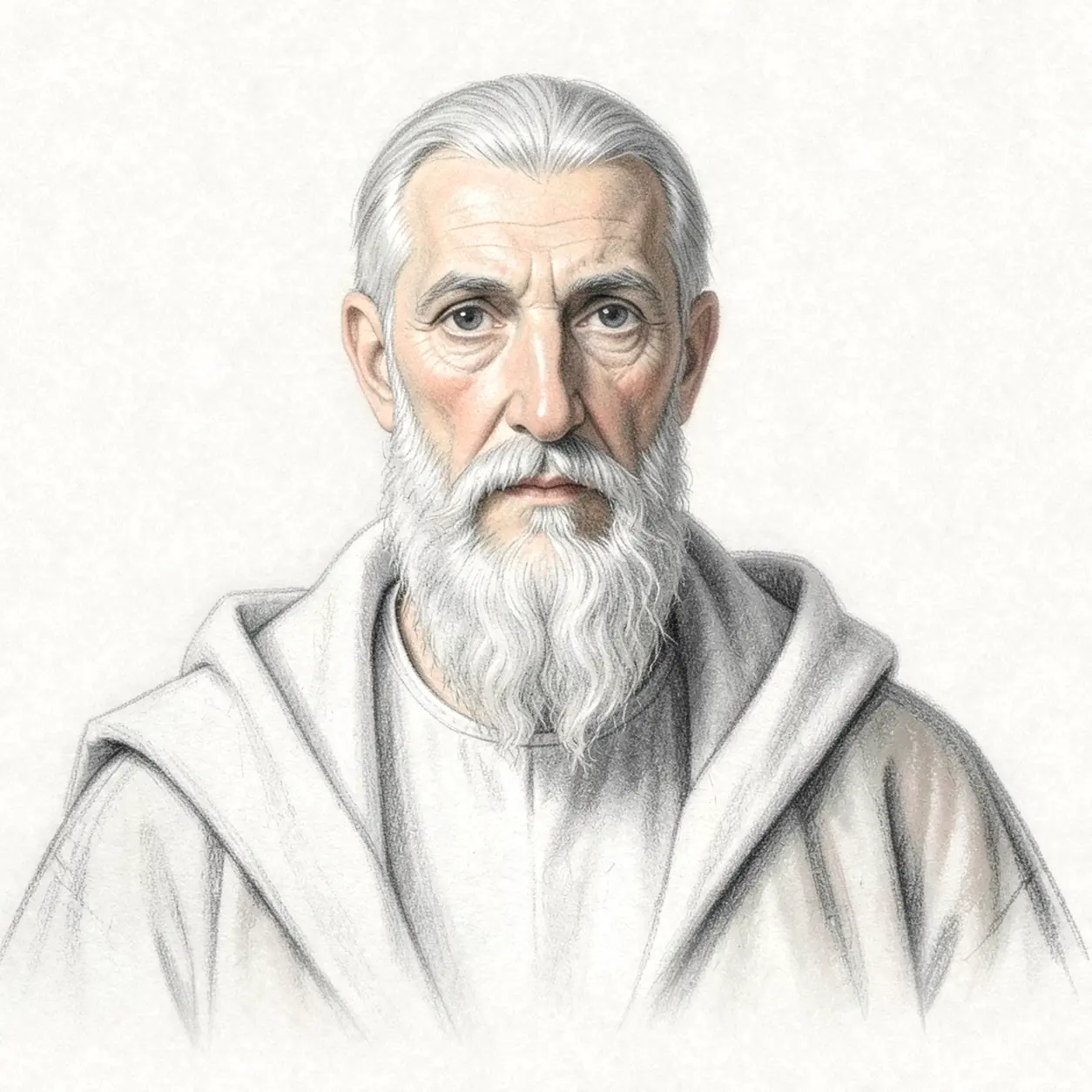
Saint Ignatius of Antioch
Bishop
Bishop and martyr, Apostolic Father, author of seven letters
Saint Ignatius of Antioch was the bishop of Antioch in Syria, a martyr, and one of the Apostolic Fathers, that is, the writers of the first generations of the Church after the Apostles. He called himself Theophorus, which means “God-bearer.” The Church keeps his memorial on October 17.
Nothing certain is known about his origins or his youth. Antioch, which today lies in Turkey, was one of the three great metropolises of the Roman Empire, and it was there that the disciples of Jesus were first called Christians. Ignatius was the third bishop of that city: tradition holds Saint Peter the Apostle to have been the first, and Evodius is named after him. The Roman Martyrology calls Ignatius a disciple of Saint John the Apostle.
During the reign of the emperor Trajan he was condemned to be devoured by wild beasts and set out for Rome under a guard of soldiers. In one of his letters he called his guards “ten leopards.” As the historian Eusebius of Caesarea recorded, in the cities where he stopped he strengthened the communities, warned them against the errors that were spreading, and urged them to hold fast to the tradition of the Apostles.
On this journey he wrote seven letters. In Smyrna, where Saint Polycarp was bishop, he wrote the letters to the Churches of Ephesus, Magnesia, Tralles, and Rome. From Troas he sent three more: to Philadelphia, to Smyrna, and to Polycarp himself. He asked the Christians of Rome not to hinder him from giving his life for Christ: “I am God’s wheat. I shall be ground by the teeth of wild beasts so that I may become the pure bread of Christ.”
The letters of Ignatius speak of the true humanity of Christ, who was truly born of the Virgin and truly nailed to the cross. They call the faithful to unity with the bishop, the presbyters, and the deacons, and they name the Eucharistic Bread “a medicine of immortality.” Ignatius was the first in Christian literature to call the Church catholic: “Wherever Jesus Christ is, there is the Catholic Church.” Of the community in Rome he wrote that it presides in charity. Benedict XVI called him the “Doctor of Unity.”
Ignatius died in Rome, thrown to wild beasts in the Flavian Amphitheater. The exact date of his death cannot be established with certainty. John Paul II and Benedict XVI gave the year 107, while other sources speak more cautiously of the years from 107 to 110 or simply of the time of Trajan. The martyr’s relics rest in the Basilica of Saint Clement in Rome.
Ignatius belongs to the saints venerated since antiquity, long before the process of canonization came into being, so there is no date of beatification or canonization for him. In Antioch he was commemorated on October 17 as early as the fourth century. His name is mentioned in the Roman Canon, the first Eucharistic Prayer, and his letters remain a precious witness to the faith of the generation that had still known the Apostles.