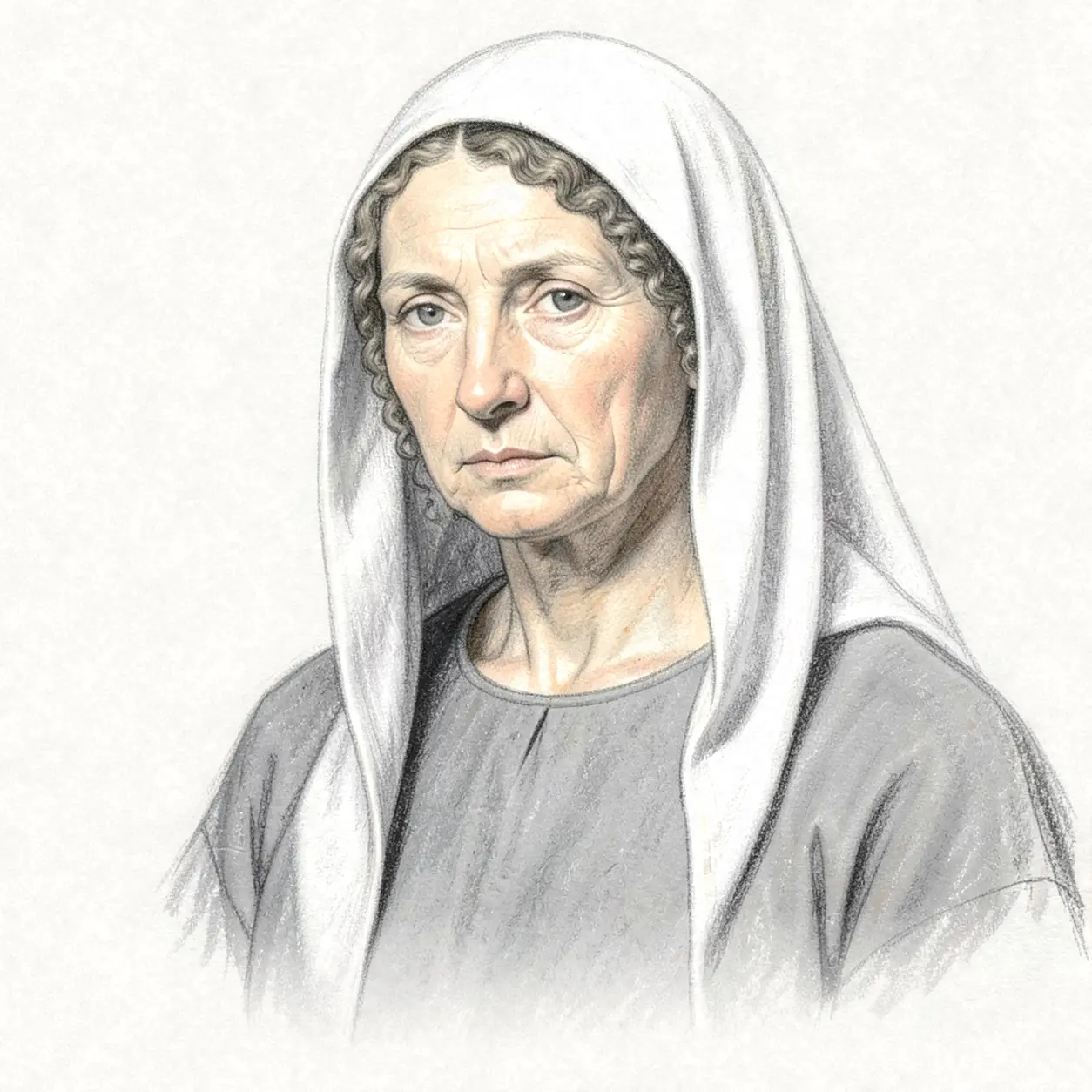
Saint Hedwig of Silesia
Matron · † 1243
Duchess of Silesia, wife and mother, foundress of the monastery at Trzebnica
Saint Hedwig of Silesia was a duchess, the wife of Henry the Bearded, and a mother, and after her husband’s death she lived in the monastery of Cistercian nuns at Trzebnica, which she herself had founded. She became known for her care for the poor and the sick. The Church commemorates her on October 16.
She came from Bavaria, from the family of the counts of Andechs. The year of her birth is not certain: dates from 1174 to 1180 are given. She was brought up by the Benedictine nuns at Kitzingen. As a very young girl she was given in marriage to Henry of the Piast dynasty, the future duke of Silesia, known as the Bearded. She came to Silesia from Germany, learned the Polish language, and remained in her new homeland for the rest of her life.
In her marriage she bore several children and raised them in the fear of God. She supported her husband in governing the duchy, while she herself lived modestly and wore plain, worn clothes. The bull of canonization recalls that the spouses, by mutual consent, made a vow of continence and lived by it for many years, so that Hedwig could give more time to prayer.
She cared for the poor in a special way. She founded hospices for them, served them herself, and looked after lepers without fear of contagion. She used to say that the poor are our masters. Together with her husband she founded in 1202 the monastery of Cistercian nuns at Trzebnica, where her daughter Gertrude later became abbess.
Henry the Bearded died in 1238. As a widow Hedwig moved to Trzebnica and from then on shared the life of the nuns. According to the bull of canonization she kept the monastic discipline more zealously than the nuns themselves, yet she did not take religious vows or give up her property. She wanted, as was reported, to go on having the means to support those in need.
In 1241 her son, Duke Henry the Pious, fell near Legnica in battle against the Tatars. The bull relates that Hedwig received the news with faith: she thanked God for such a son and commended his soul to him. She died at Trzebnica on October 15, 1243, and was buried in the monastery there, where her shrine stands to this day.
The bishops and dukes of Poland, together with the abbess and nuns of Trzebnica, asked Pope Urban IV for her canonization, and he ordered her life and miracles to be examined. Clement IV enrolled her among the saints on March 26, 1267, in Viterbo. On the day of her memorial, October 16, 1978, Cardinal Karol Wojtyła was elected pope. John Paul II called Saint Hedwig the patroness of reconciliation between neighboring nations.