Saint Gerald of Aurillac
Lay Person · † 909
Count of Aurillac, founder of a Benedictine abbey, protector of the poor
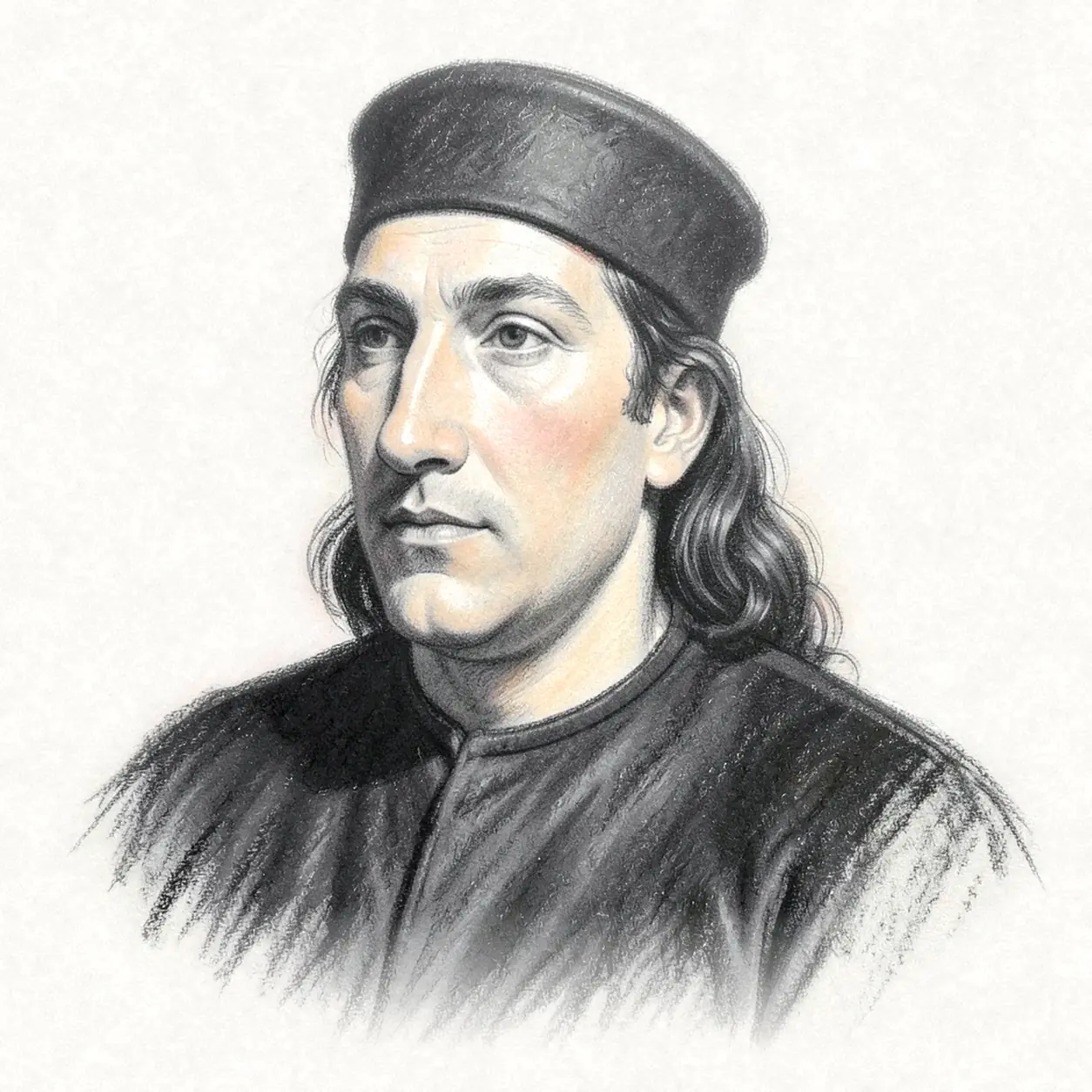
Saint Gerald of Aurillac was a count in Auvergne and a layman. He governed his lands justly and cared for the poor, and without leaving his state of life or his secular dress he secretly lived a life modeled on that of monks. He founded the abbey of Aurillac. The Church commemorates him on October 13.
What we know of his life comes mainly from a Life that tradition attributes to Saint Odo, abbot of Cluny, writing around 930. Some modern historians question this authorship. The Life presents Gerald as the model of a nobleman who becomes a saint in his own state of life. The Roman Martyrology also holds him up as an example to the powerful of this world.
He was born around the middle of the ninth century into a noble family from the region of Aurillac. As a child he was ill for a long time, so he was taught grammar and church chant with a view to the clerical state. When he recovered, he was trained for knighthood. After his parents’ death he took over the extensive family estates. According to the Life, he wished to enter a monastery, but a bishop whom he consulted persuaded him that he would do more good by remaining in the world. He did not marry and lived in chastity.
The Life describes him as a lord who ruled differently from many nobles of his time. Anyone could come to him with a complaint, and he settled cases in person. He invited the poor to his table and served them himself, and he gave freedom to many of his unfree subjects. He did not shrink from defending his lands, but he tried to limit the violence of war and knew how to make peace with those he had defeated.
At the end of the ninth century he founded on his lands at Aurillac a Benedictine monastery dedicated to Saint Peter and brought monks to it from Vabres. He himself became neither a monk nor an abbot. The abbey became an important center of learning. Some decades after Gerald’s death the monk Gerbert, the future Pope Sylvester II, was formed there.
In the last years of his life he lost his sight and accepted this trial with patience. He died on October 13, 909, at Cézerniac, his estate identified today with Saint-Cirgues in Quercy. He was buried in the church of the monastery he had founded at Aurillac.
Gerald lived before canonization processes existed. He was venerated as a saint soon after his death, first at Aurillac and in Upper Auvergne. He is among the first lay people whom the Church recognized as saints even though they were neither martyrs nor religious.