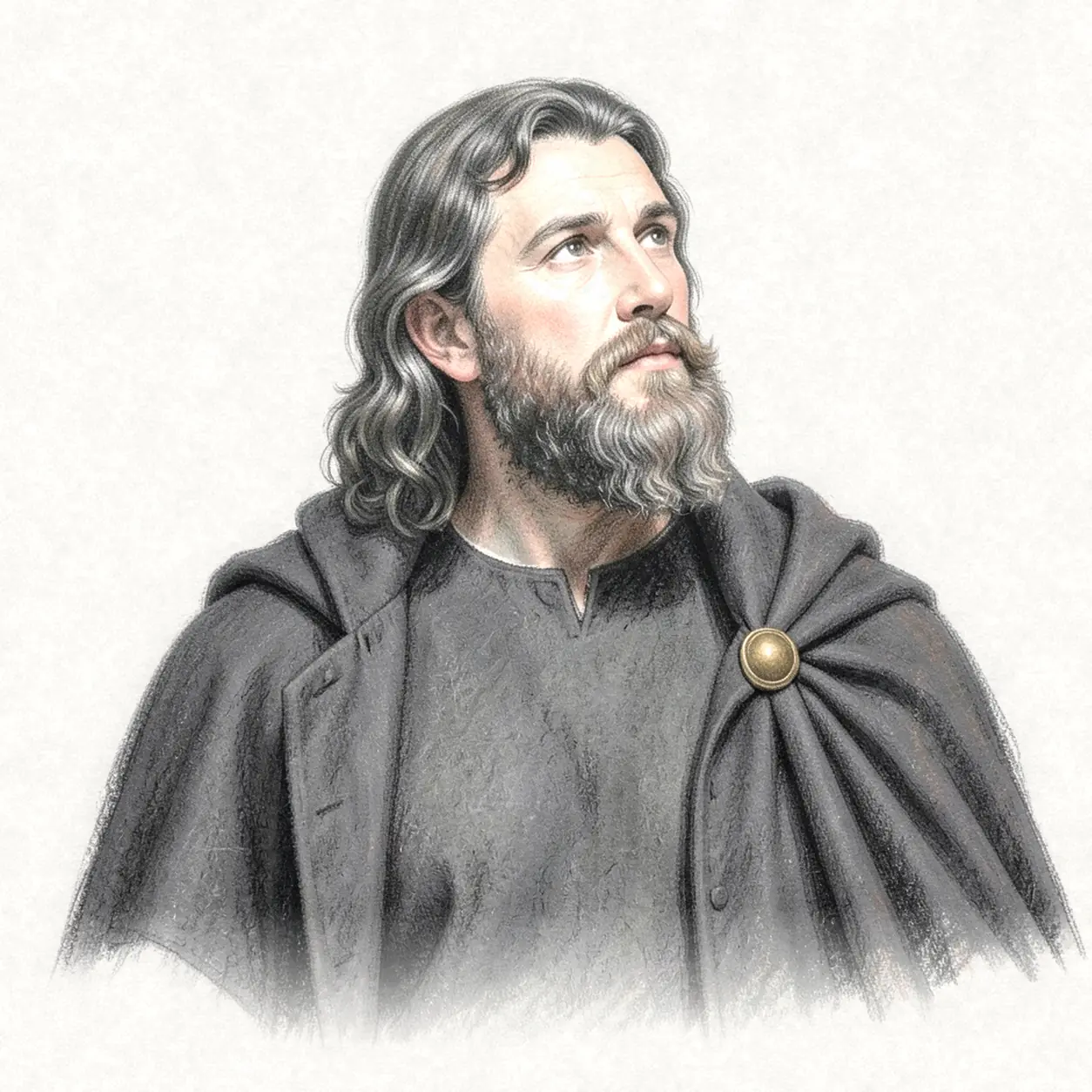
Saint Cornelius the Centurion
Lay Person
Roman centurion, baptized by Saint Peter, first of the Gentiles in the Church
Saint Cornelius was a Roman centurion at Caesarea in Palestine, baptized by Saint Peter the Apostle. His relatives and friends were baptized together with him, the first Gentiles brought into the community of the Church. The Church commemorates him on October 20.
Everything we know about him comes from the Acts of the Apostles, chapters ten and eleven. We do not know the year of his birth or of his death. Saint Luke presents him as a centurion of the cohort called the Italica, that is, an officer of the Roman army. He served at Caesarea, the coastal city where the Roman governor of Judea resided.
Cornelius was not a Jew but belonged to the Gentiles who were called God-fearing: he worshipped the one God, prayed constantly, and gave alms generously to the Jewish people. He shared this devotion with his whole household. One day, at about three in the afternoon, he saw an angel in a vision. He heard from him that God remembered his prayers and his alms, and he was told to send to Joppa for Simon called Peter. He at once sent two of his servants and a devout soldier to bring him.
The next day, as the messengers were approaching Joppa, Peter had a vision from which he understood that he must not call unclean what God has made clean. When the apostle arrived in Caesarea, Cornelius was waiting for him with his relatives and closest friends. He went out to meet him and fell at his feet, but Peter raised him up and said that he himself was only a man.
By entering the house of a Gentile, Peter went beyond Jewish custom, and he declared that God truly shows no partiality, and that in every nation whoever fears him and acts uprightly is acceptable to him. While he was still speaking about Jesus to those gathered, the Holy Spirit came down on all who were listening, and they began to speak in tongues and to glorify God. John Paul II called this event the Pentecost of the Gentiles. Peter recognized that the water of baptism could not be refused to those who had received the Holy Spirit, and he ordered them to be baptized in the name of Jesus Christ.
In Jerusalem the believers of Jewish origin reproached Peter for having entered the house of uncircumcised men and eaten with them. The apostle told them step by step what had happened, and they calmed down and glorified God because he had granted to the Gentiles too the repentance that leads to life. The baptism in the house of Cornelius opened for the Church the way to all nations.
Scripture does not say how the rest of Cornelius’s life unfolded or when he died. Later accounts, which do not agree with one another, make him a bishop, but the present Roman Martyrology does not mention this. Saint Jerome, describing the pilgrimage of Saint Paula to the Holy Land, noted that at Caesarea she saw the house of Cornelius turned into a church. Cornelius has been venerated as a saint since antiquity, without a formal canonization. The Roman Martyrology calls him the first fruits of the Church from the Gentiles.