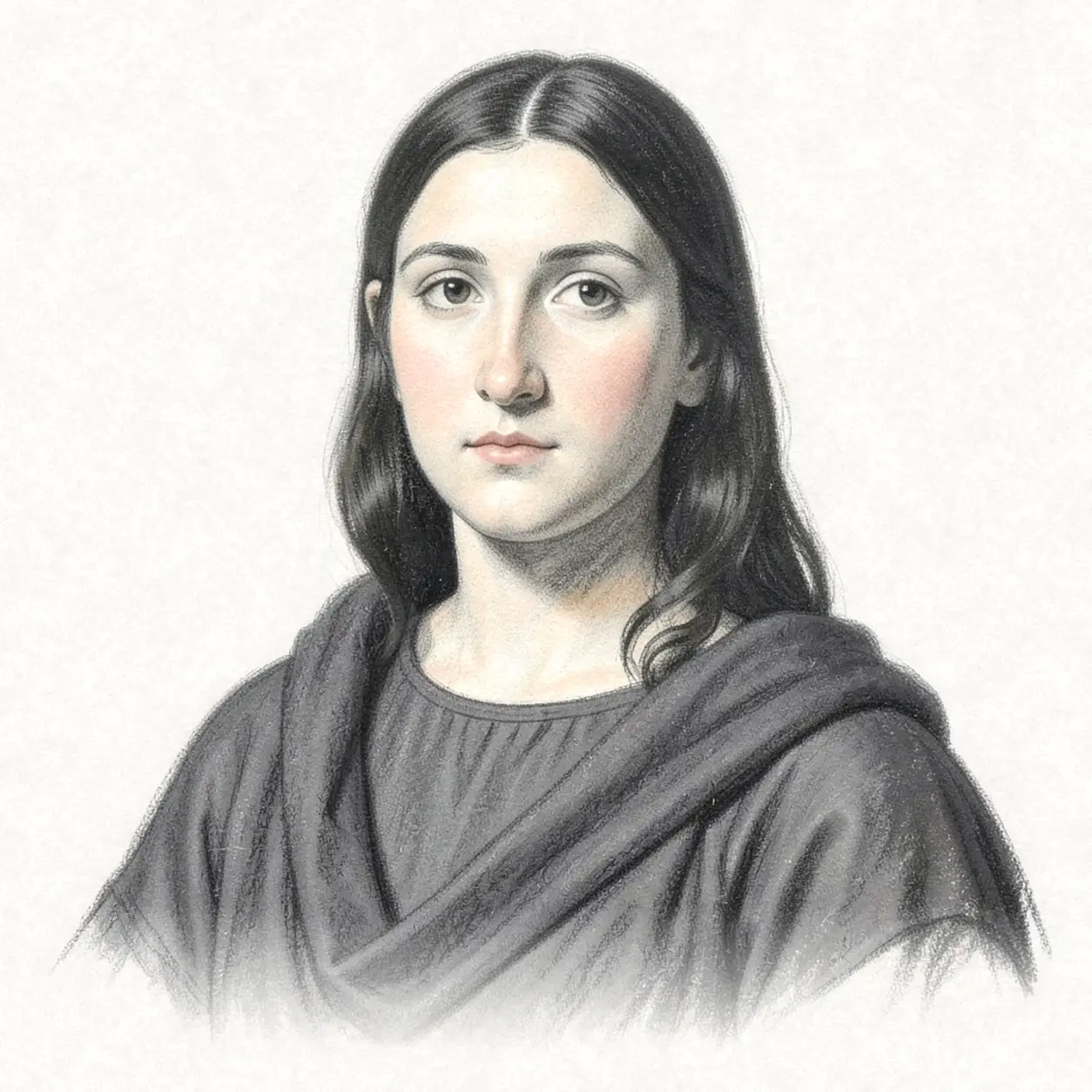
Saint Catherine of Alexandria
Lay Person
Virgin and martyr of Alexandria, patroness of philosophers and theologians
Saint Catherine of Alexandria is venerated as a virgin and martyr of Alexandria in Egypt. Tradition places her death at the beginning of the fourth century, during the persecution of Christians. The Roman Martyrology says that she was renowned for the sharpness of her mind and her wisdom, and equally for her strength of soul. The Church commemorates her on November 25.
No certain historical information about her life has survived. The oldest known accounts of her martyrdom were written long after her time, between the fifth and the eighth century, and they bear the marks of legend. The Martyrology itself notes that it reports about her what tradition hands down. What follows, then, is the story told by tradition, not a documented biography.
According to tradition, Catherine came from a distinguished family and received a careful education. She was eighteen when the ruler, called Maxentius or Maximinus in the accounts, ordered sacrifices to be offered to the gods in Alexandria. She stood before him and called on him to acknowledge Christ. The emperor summoned fifty wise men who were to persuade her to give up her faith. The opposite happened: moved by her words, it was they who came to believe in Christ, and they were put to death for it.
Tradition goes on to relate that the ruler offered Catherine marriage and that she refused, because she wanted to belong to Christ alone. She was imprisoned and condemned to die on a wheel set with blades, but the instrument of torture fell apart without harming her. In the end she was beheaded with a sword. That is why art shows her with a broken wheel, a sword, and a book.
According to the same tradition, angels carried her body to Mount Sinai. At the foot of the mountain stands a monastery whose church was built in the sixth century by the emperor Justinian and which in time took the saint’s name. It is not known when or how her relics came there, but they are venerated in it to this day. In February 2000 John Paul II came there as a pilgrim and recalled that in this place the body of the martyr Catherine found its resting place.
The veneration of Saint Catherine arose in the East. In the West its oldest traces date from the eighth century, and in the Middle Ages it spread across all of Europe. She was counted among the Fourteen Holy Helpers and regarded as the patroness of philosophers, theologians, and students. The bull of canonization of Saint Joan of Arc mentions that the archangel Michael promised her the help of Saints Catherine and Margaret.
Catherine did not go through a canonization process: the Church has venerated her as a saint since ancient times. In 1969, because of the lack of certain information about her life, her memorial was removed from the General Roman Calendar. In 2002 it was restored as an optional memorial. The prayer that the Roman Missal has since assigned to this day asks that through her intercession we may be strong in faith and steadfast, and work zealously for the unity of the Church.