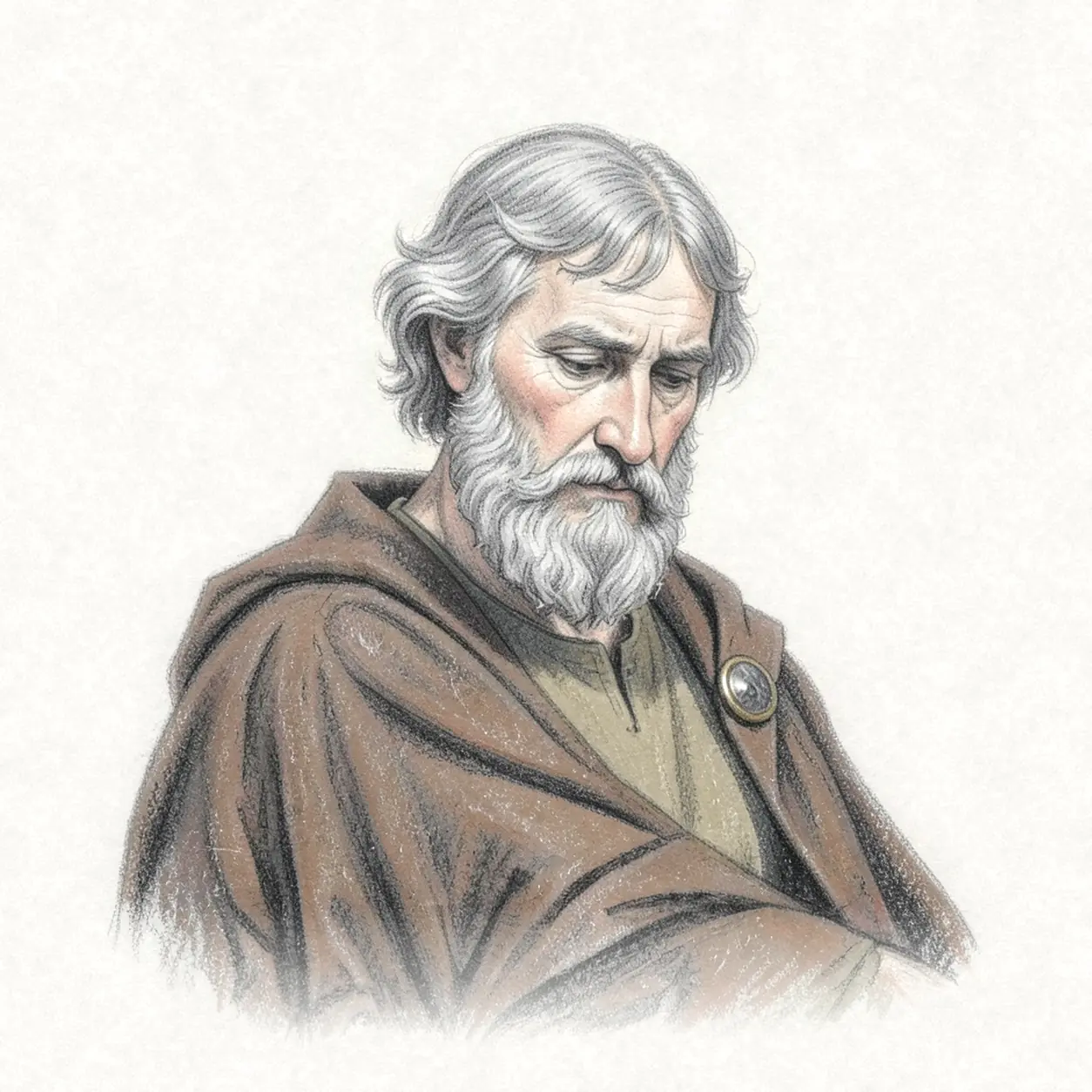
Saint Ananias of Damascus
Lay Person
Disciple of the Lord at Damascus, baptized the converted Saul of Tarsus
Saint Ananias was a disciple of the Lord at Damascus, whom Christ sent to the blinded Saul of Tarsus. He laid his hands on him so that he might see again and baptized him, and the former persecutor of the Church became Paul, the Apostle of the Gentiles. The Church commemorates Ananias on January 25, the feast of the Conversion of Saint Paul the Apostle.
Everything we know about him for certain comes from the Acts of the Apostles, chapters 9 and 22. We do not know the year of his birth or of his death, nor how he came to believe in Jesus. Saint Luke simply calls him a disciple. Saint Paul, recalling him years later in Jerusalem, speaks of him as a devout man, faithful to the Law, of whom all the Jews living in Damascus spoke well.
Saul was on his way to Damascus with letters from the high priest, in order to imprison the followers of Jesus there. Near the city a light from heaven flashed around him and he heard the voice of Jesus, whom he was persecuting. He lost his sight and for three days neither ate nor drank. Then the Lord spoke to Ananias in a vision. He told him to go to the street called Straight and to ask at the house of Judas for Saul of Tarsus, who at that moment was praying.
Ananias did not hide his fear. He answered that he had heard from many how much evil this man had done to the believers in Jerusalem. He was then told that the Lord had chosen Saul as his instrument to carry his name to the Gentiles, to kings, and to the children of Israel. Ananias went. He entered the house, laid his hands on Saul, and addressed him with the words “Saul, my brother.” He told him that the Lord Jesus had sent him so that Saul might regain his sight and be filled with the Holy Spirit. Immediately something like scales fell from Saul’s eyes. He regained his sight and was baptized.
According to Paul’s own account, Ananias told him that the God of their fathers had chosen him to know his will and to be his witness before all people. He also urged him not to delay, but to be baptized and have his sins washed away, calling on the name of the Lord. Here ends what Holy Scripture says about Ananias.
John Paul II, on pilgrimage to Damascus in 2001, recalled that Ananias, despite his doubts and fears, obeyed the Lord and without hesitation called the enemy of the Christians a brother. The Pope saw in this two marks of the Church’s mission: courageous obedience to God’s word and a willingness to forgive and be reconciled.
A later Eastern tradition counts Ananias among the seventy-two disciples sent out by Jesus and makes him the first bishop of Damascus and a martyr. He is said to have been scourged and stoned by order of the governor Licinius. The present Roman Martyrology does not repeat these details and calls him a disciple of the Lord who baptized the converted Paul. In the old city of Damascus pilgrims visit a crypt known as the house of Saint Ananias, which is cared for by the Franciscans of the Custody of the Holy Land. Ananias has been venerated as a saint since antiquity, without a formal canonization.