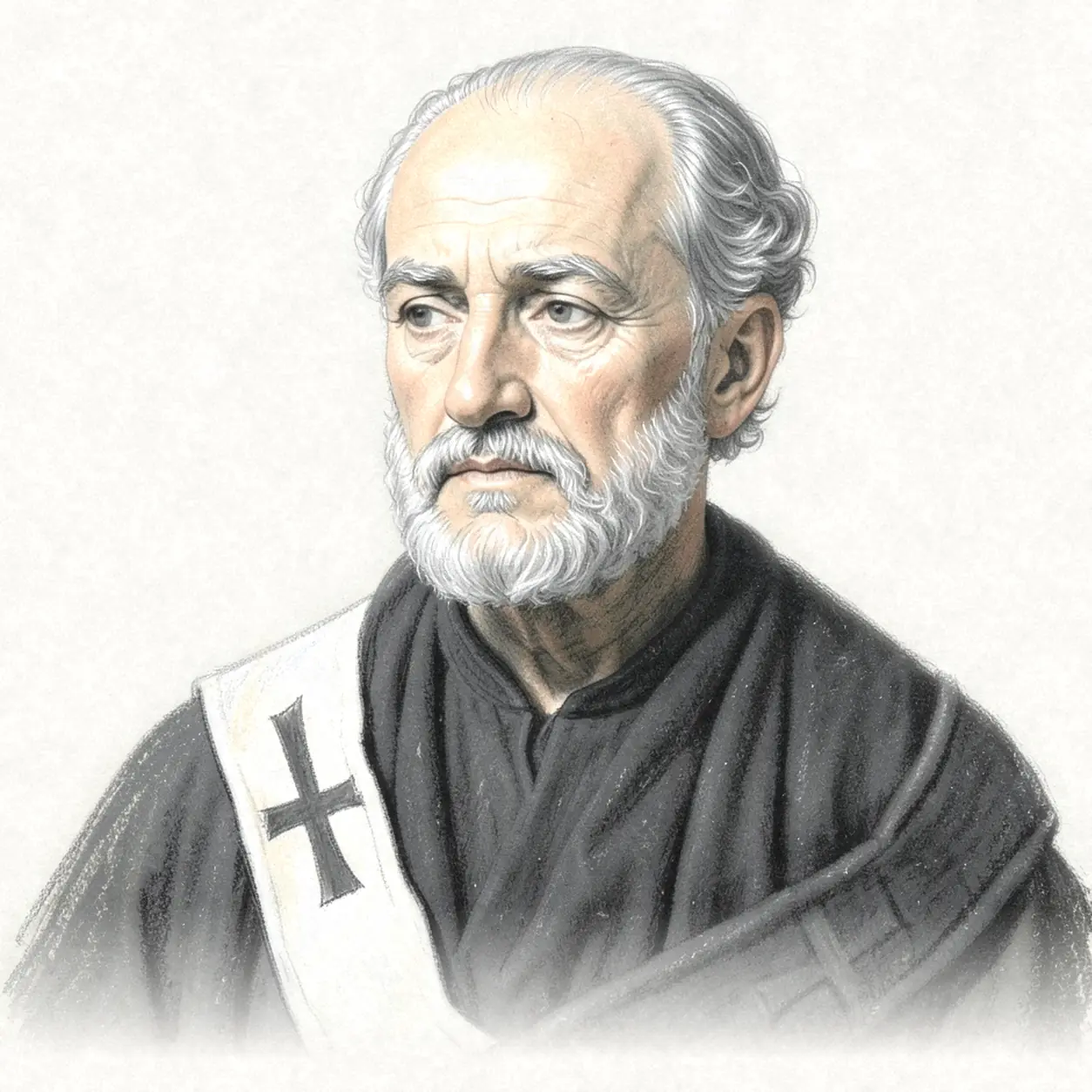
Saint Alexander of Alexandria
Bishop
Bishop of Alexandria, opponent of Arius, father of the Council of Nicaea
Saint Alexander was bishop of Alexandria in Egypt in the first half of the fourth century. He opposed the teaching of his priest Arius, who denied the true divinity of the Son of God, and as an aged pastor he took part in the Council of Nicaea in 325. The Church commemorates him on February 26.
Almost nothing is known of his origins and youth. The year of his birth is not known; a date around 250 is given. He belonged to the clergy of Alexandria in the years of the great persecution, whose last victim was the bishop of that city, Saint Peter. After the brief episcopate of Achillas, Alexander became bishop; the year most often given is 313. He found the Church in Egypt divided by the schism of Melitius, which had lasted since the time of Peter.
A few years later the priest Arius began to teach that the Son of God is a creature and that there was a time when he did not exist. Alexander, as he himself wrote, at first preferred not to give the matter publicity and tried to persuade Arius. When this failed, he convened a synod of nearly a hundred bishops of Egypt and Libya, which condemned this teaching and excluded its adherents from the communion of the Church.
He informed the bishops of other Churches by letter of what had happened. Two of these letters were preserved by the ancient historians Socrates Scholasticus and Theodoret of Cyrus. In them Alexander defends the faith that the Son is eternally begotten of the Father, and he appeals to the opening of the Gospel of Saint John. In one he calls Mary the Mother of God (Theotokos); it is one of the early witnesses to this title. Arius, however, was supported by Bishop Eusebius of Nicomedia, and the dispute spread to other Churches of the East.
Emperor Constantine sent Bishop Hosius of Cordoba to Alexandria with a letter calling for concord, and when that did not help, he summoned the bishops to Nicaea. At the council Alexander was accompanied by the deacon Athanasius. The council Fathers rejected the teaching of Arius and professed that the Son is consubstantial with the Father. They also dealt with the schism of Melitius and confirmed the ancient custom by which the bishop of Alexandria has authority over the Churches of Egypt, Libya, and Pentapolis. In their letter to the Church of Alexandria they asked that the bishop, who despite his advanced age had undertaken so great a labor for the sake of peace, be received with all the greater honor.
The year of his death is not certain. Older works give the year 326. The chronicle attached to the Festal Letters of Saint Athanasius places his death on April 17, 328, and this is the year Benedict XVI gave in his catechesis on Saint Athanasius. According to tradition, before his death Alexander designated Athanasius as his successor. Rufinus of Aquileia relates that the bishop had noticed him when Athanasius was still a boy and saw to his education.
The Church has venerated Alexander as a saint since antiquity, long before the procedure of canonization came into being. The Roman Martyrology remembers him as an aged bishop burning with zeal for the faith, one of the three hundred and eighteen Fathers who condemned the error of Arius at Nicaea.