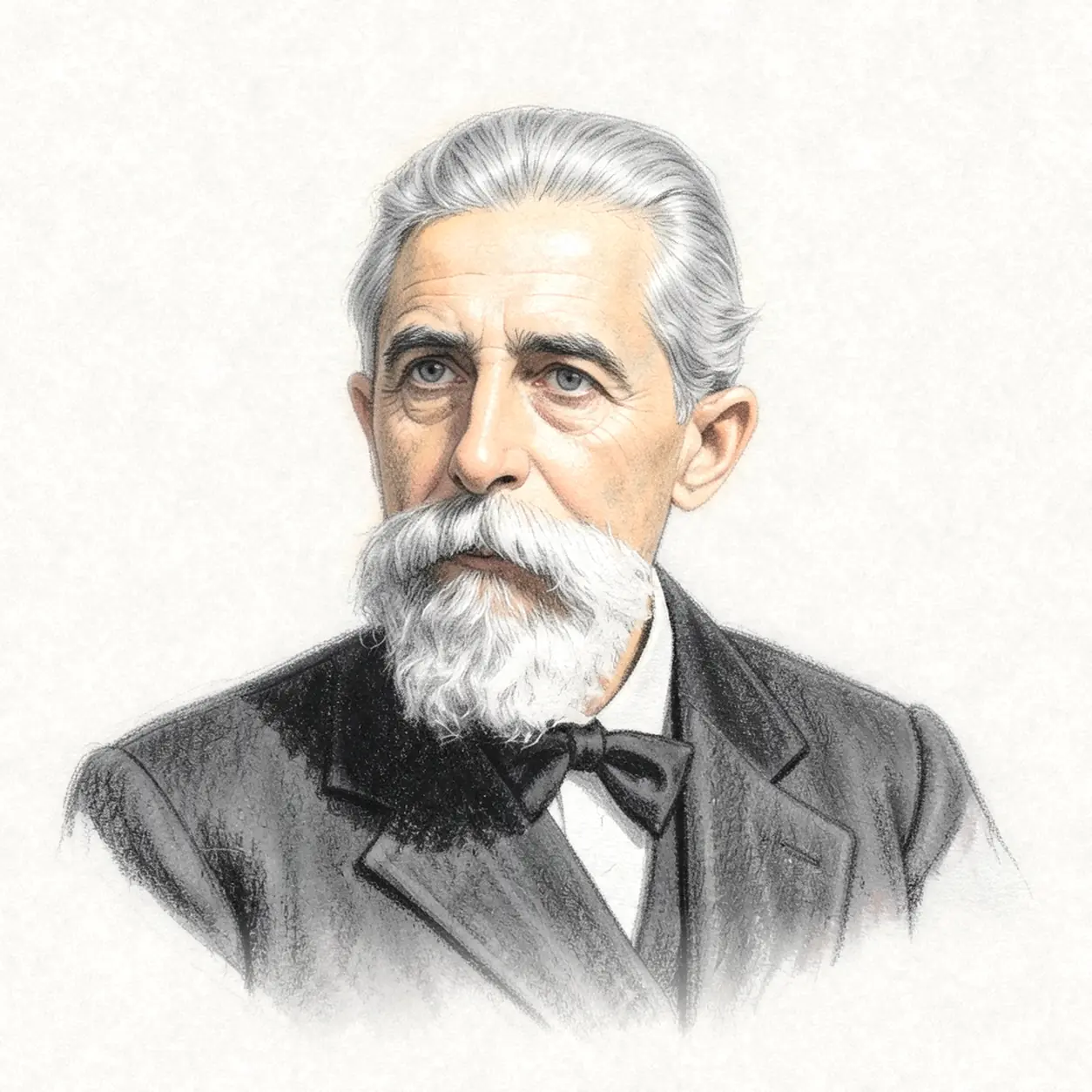
Blessed Giuseppe Toniolo
Lay Person · 1845-1918
Layman, father of a family, economist, professor at the University of Pisa
Blessed Giuseppe Toniolo was an Italian economist and sociologist, a professor at the University of Pisa, a husband and the father of seven children, and a layman active in Catholic Action. The apostolic letter of his beatification allows his memorial to be celebrated on October 7, the day of his birth into heaven.
He was born in Treviso on March 7, 1845. He studied at the Marco Foscarini college in Venice, where Father Luigi Dalla Vecchia was his spiritual director. In 1867 he earned a law degree in Padua, and the following year he became an assistant in the same faculty. In 1879 he began teaching political economy in Pisa. As a professor he combined scholarly rigor with faith and with care for young people.
On September 4, 1878, he married Maria Schiratti; they had seven children. Though different in temperament, they formed a harmonious marriage and lived the sacrament as a source of grace for the whole family. Despite his many duties, Toniolo began each day with Holy Mass and found time every day for the Rosary.
He was convinced that Christian ethics should shape the economy as well. In 1889, with the support of Leo XIII, he founded the Catholic Union for Social Studies, and two years later the encyclical Rerum novarum was published. In 1893 he launched the scholarly journal “Rivista internazionale di scienze sociali.” He spoke up for workers’ rights that were not yet generally recognized at the time: Sunday rest, limited working hours, the protection of small property and the protection of the work of women and children.
After the dissolution of the Opera dei Congressi he was entrusted with renewing Catholic Action. On his initiative the Social Weeks of Italian Catholics began in 1907. He supported the plan for a Catholic university, from which, after his death, the Catholic University of the Sacred Heart grew, and during the war he proposed to Benedict XV the creation of an institute of international law at the service of peace. He wrote: “The one who will finally bring today’s society to salvation will not be a diplomat, a scholar or a hero, but a saint, or rather a society of saints.”
In 1918 he was afflicted by illness, and he also suffered because of the war that had shattered peace in Europe. Confined to bed, he obtained the Pope’s permission to set up an altar in his room so that he could take part in Holy Mass and unite his sufferings each day with the Passion of Christ. He died in Pisa on October 7, 1918, the feast of Our Lady of the Rosary. His mortal remains rest in the parish church of Santa Maria Assunta in Pieve di Soligo.
In 1971 Paul VI recognized his heroic virtues, and in 2011 Benedict XVI approved a miracle attributed to his intercession. The beatification took place on April 29, 2012, in the Basilica of Saint Paul Outside the Walls; Cardinal Salvatore De Giorgi presided on behalf of Benedict XVI. That day the Pope recalled that the new blessed points out the way of the primacy of the human person and of solidarity.